
Our hospital has experienced an influx of Brown Pelicans suffering from breve-toxicosis. Read more here to learn about the cause of this illness, how it is treated, and what you can do to help the sick and injured birds in our care!
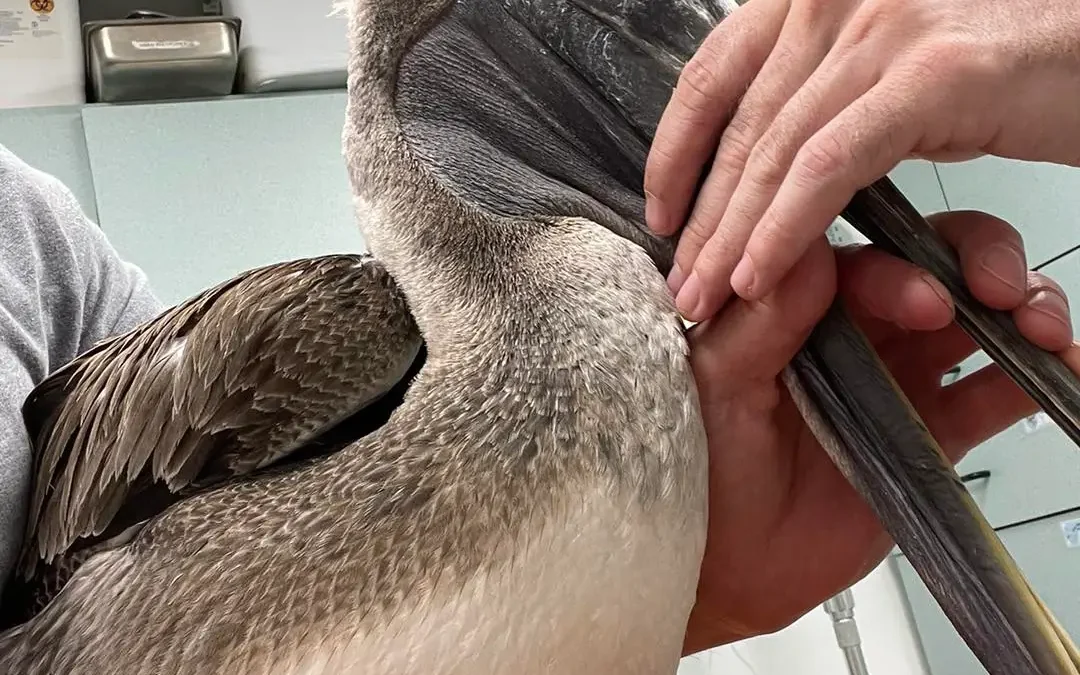
Over the past several days, our hospital has seen an influx of Brown Pelicans showing symptoms indicative of breve-toxicosis, or Red Tide.
Red tide is a toxic algal bloom that can occur in Florida, most frequently in the Gulf of Mexico. In addition to general weakness and lethargy, birds exposed to these harmful algal blooms often experience damage to their nervous systems, resulting in an inability to control their movements. They can reach a point where they are unable to stand, hold their heads up, or even blink their eyes.
Many of our patients have begun to show encouraging signs of improvement, but we still have several in critical condition. Without immediate medical intervention, birds suffering from red tide intoxication in the wild will die. Our hospital staff have been working tirelessly around the clock to stabilize these patients and to increase their chances of recovery. In addition to the pelicans receiving treatment for toxicosis, we are also currently treating several juvenile pelicans who were admitted due to fishing hook/line entanglement injuries. Hook and line injuries are the most common reason for admission at our facility throughout the year.
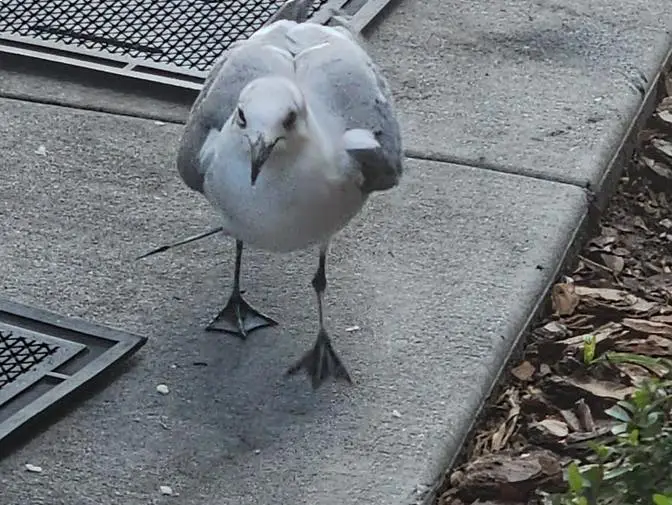
What can you do to help these pelicans? Be on the lookout for any bird that does not seem to be acting quite right- birds that let people get too close and won’t move around in a way that is normal for that species. If you’re not sure, call us- better to be safe than sorry, and we are happy to help determine if a bird needs treatment or not!
To help these birds, we need to be able to access the critical medications and supplies that allow them to recover. Please consider sharing this article with your peers as well as donating to help us care for the patients being treated in our hospital, to help us care for our permanent resident birds, and to help us continue in our hurricane recovery process. Your support goes a long way to helping us save and care for our precious avian wildlife!